

Raine Devries | 9 October 2026
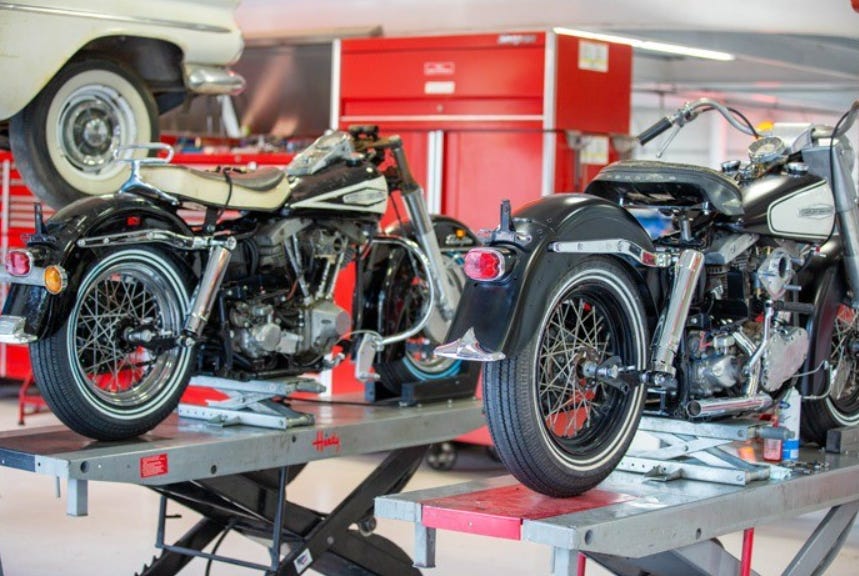
The hardest part of keeping a discontinued motorcycle is no longer the riding. It is finding the parts. The used market is confirming what shops already see: a motorcycle does not lose its appeal when the line stops, and demand for those mechanical classics is rising on eBay. It is not limited to Harley-Davidson. Ducati, Indian, Triumph, BMW, Honda, and Yamaha riders are hunting the same thing, a bike they can still wrench, ride, and understand, even when keeping it on the road gets harder. That difficulty is part of the appeal.
My personal ride is a carbureted 2001 Harley-Davidson FXDL that I have owned since she was new on the showroom floor, and we have ridden all over the US together. Her name is Superstition - I was born on Friday the 13th - and our 26th anniversary is next month on November 30. My goal for my bike is for her to take part in the Motorcycle Cannonball once she is eligible in a few decades.
Next month also marks the end of the “riding season” with the Lone Star Rally, November 5–8 in Galveston. Some of you riders actually have to “winterize” your motorcycles and the riding calendar does not really open again until Daytona Bike Week next March. During this lull for many riders, there will be plenty of bikes sitting idly. And the next 4-5 months will be an ideal window of opportunity to upgrade, address fluids, chase a noise, and fine-tune a bike before the first warm Saturday shows up unannounced next Spring.
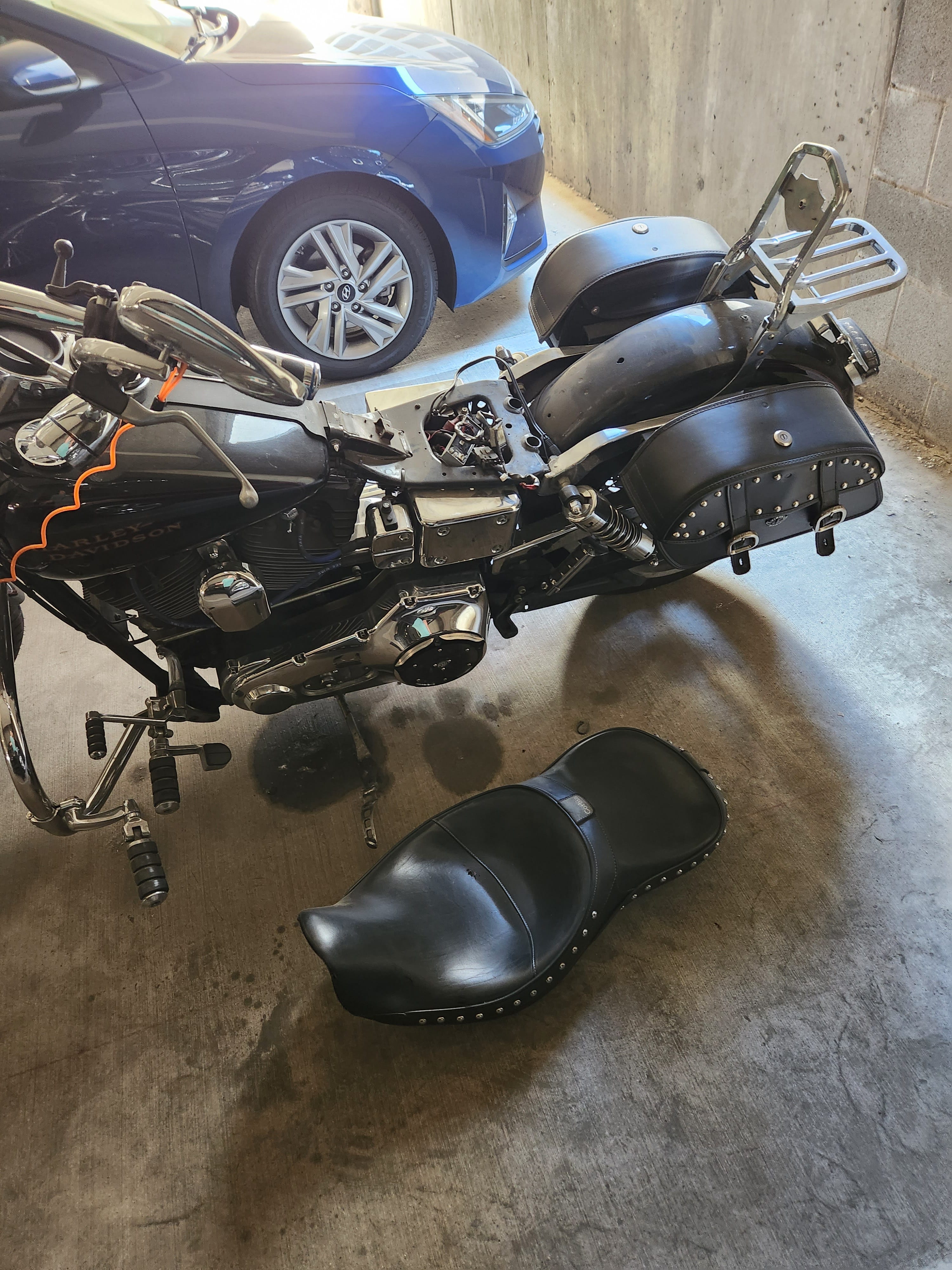
For several years I was excited about the Texas antique motorcycle plate once Superstition achieved the age of 25. The state issues those plates for motorcycles at least 25 years old that are collector pieces used for exhibitions, club activities, parades, and similar events, not daily transportation. I was hesitating because she is still a daily rider. Then two thieves tried to steal her from a secure residential parking garage, along with several other motorcycles. By the Grace of God, the attempt failed - but the damage did not.
In spite of the damage from the attempted theft of my bike, a $56 Harley-Davidson disc brake lock kept Superstition from being rolled onto the U-Haul cargo van driven by the two crooks recorded on the CCTV.
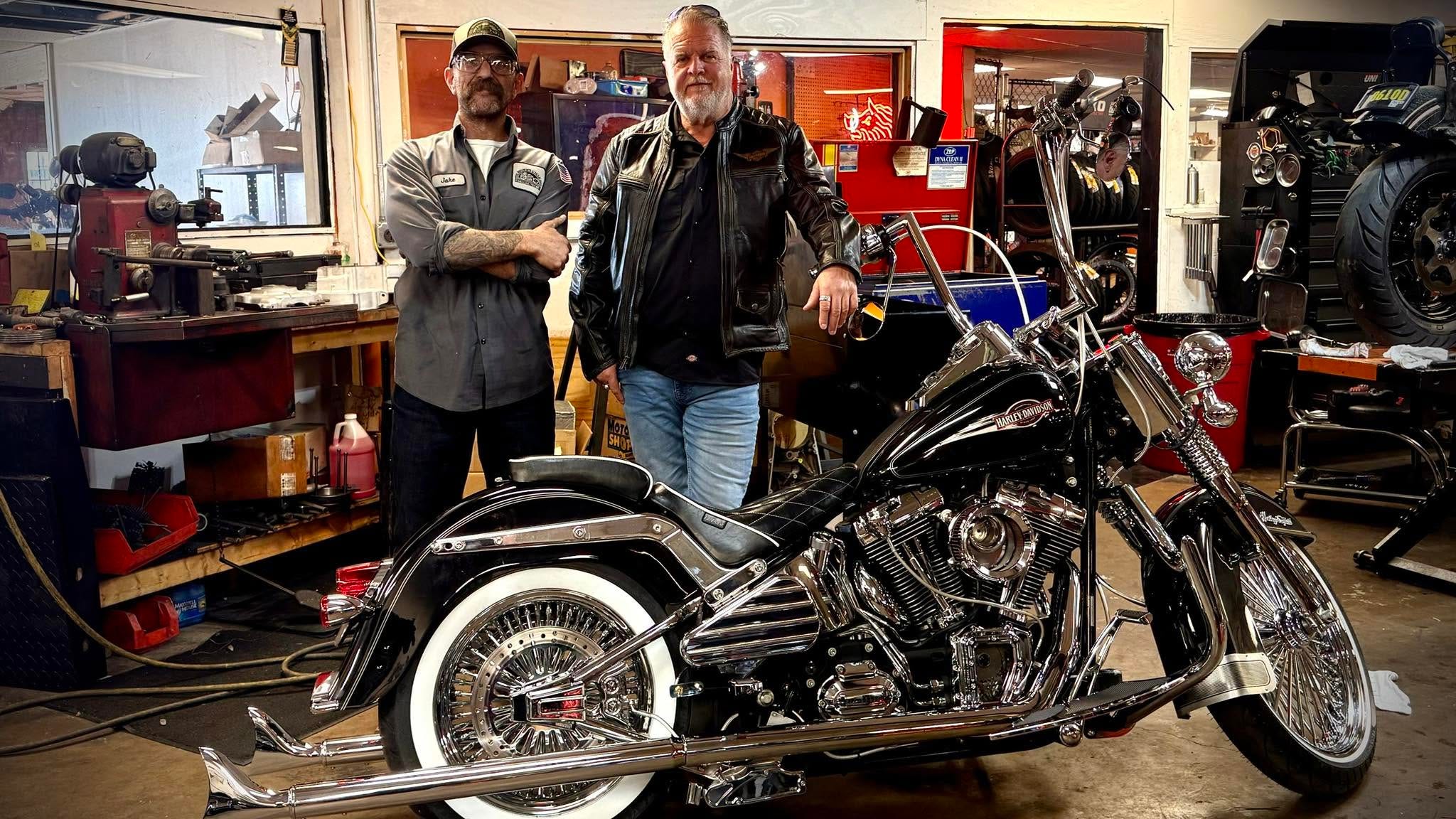
About $2,000 worth of parts were damaged or stolen, and my mechanic, Jake Payton at Brown’s Cycles in Dallas, spent a full nine months sourcing the parts she needed because the factory no longer made them. The hardest part to track down was the wiring harness, which he found on eBay from a seller in Oregon. After being without my bike for so long, I am no longer overly enthused about advertising her antique status, so I think I’m going with the “Native Texan” plate.
Industry Note: The Parts Clock Starts at 10 Years
Dealers see the same clock, and it starts earlier than most owners think. George Gatto of Three Rivers Harley-Davidson sells bikes of all ages, and he is candid about the parts curve. It starts to get difficult after 10 years, and it worsens at 15. For the record, painted parts are discontinued first, and he was clear that this is all brands, not just Harley. In a dealership sale, current stock, usually less than a year old, goes for dealer cost. Aged stock gets a steep discount, if the buyer pays anything at all. Obsolete stock is worth zero. That is why a fender or a harness can vanish from the parts counter long before a rider needs it. The encouraging note is that Harley-Davidson has told him the factory is looking at adding back some parts more than 10 years old. A 2012 of any make is already in the painted-parts gap. A 2001 like Superstition is well past the hard-parts line. Winter is when that gap shows up on the bench.

A couple of weeks ago I asked Jake the obvious follow-up: If a 2001 Dyna took nine months to source the needed parts, how do the owners in the Cannonball keep pre-war machines on the road? His answer was simple: That caliber of rider is usually fabricating the parts from scratch.
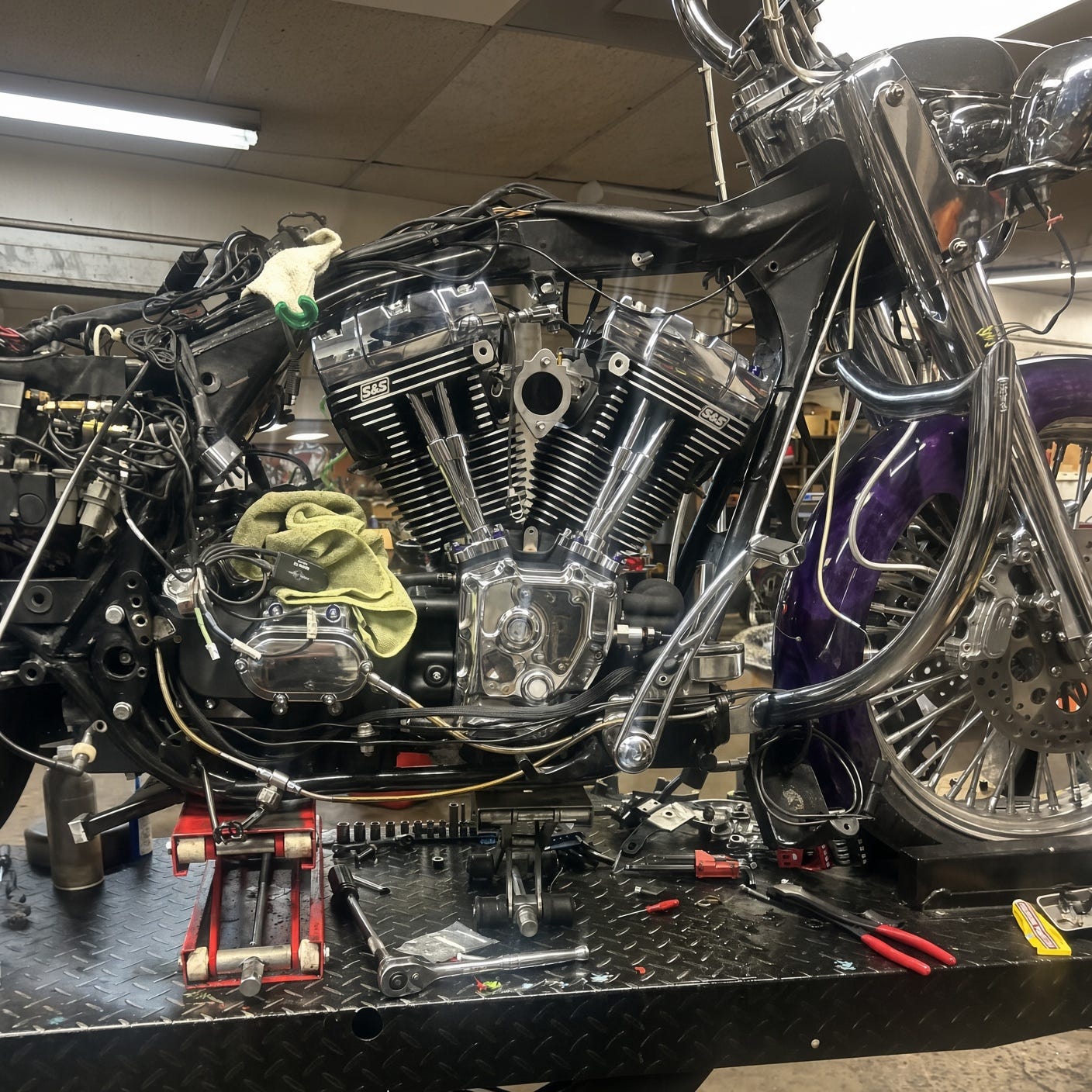
The shelf runs out. The bench does not. A pattern, a lathe, and a rider who refuses to park the bike are the real parts network once the OEM catalog is a history book. That is as true for a 1928 Indian as it is for an air-cooled Triumph, a first-generation Honda CB, or a discontinued Harley.
That hunt is the mechanical-classic market in one sentence. The bike is worth saving and the part still exists, or it can be made. You just have to know where to look, and winter is when that search earns its keep.

Jeff Milburn: American Parts, Swap Meets, and The Bikeriders
Dallas-based stunt coordinator Jeff Milburn, who sourced the 45 motorcycles that made up the vintage fleet for the 2024 film The Bikeriders, says three or four companies are now offering strong American-made parts for bikes from the 1980s and earlier. One he points to is Colony Machine, a wholesale house that has spent more than 40 years on Harley hardware, with engineered kits from 1911 forward and a catalog you can search by the authentic Harley part number. Colony sells to the trade, not over the counter, which is how a lot of the good restoration hardware actually moves.
Click here to read my Rider Magazine profile of stunt coordinator Jeff Milburn. He walks through how he began working in the industry, then the behind-the-scenes job of sourcing, prepping, and keeping the vintage motorcycles running on The Bikeriders.
Milburn has also walked Harley-Davidson CEO Artie Starrs through some of the bigger swap meets so he could see the secondary market in person. He said he could watch Starrs working through how the Motor Company can better serve older bikes and the riders who still love them. The demand is not theoretical when the parts are sitting in front of you on folding tables surrounded by hundreds of attendees.
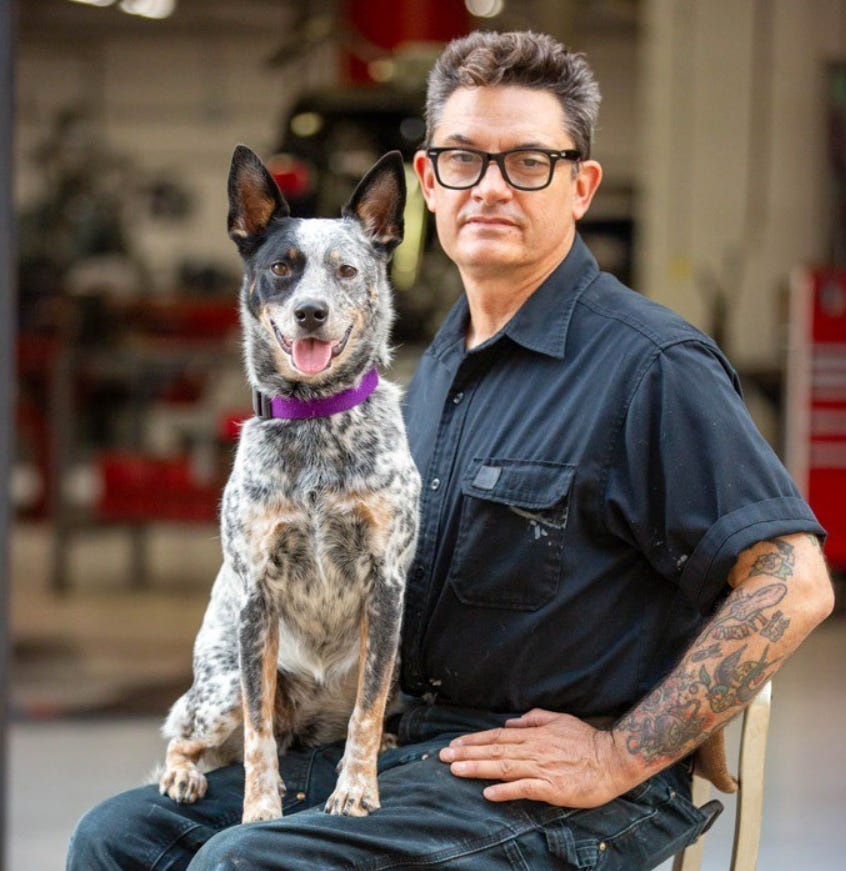
On The Bikeriders, the production had been tempted to fake the era with newer bikes and a little costume work. Director Jeff Nichols trusted Milburn to do it honestly. Milburn put the actors through a two-week riding boot camp, doubled Austin Butler, and kept that fleet firing through a cold Cincinnati winter standing in for 1960s Chicago. His line still fits a garage in January: keeping that many older bikes running at once was a pain, but it was worth it.
MotoStaq: A Marketplace Built After a Missing Part
MotoStaq is a new kid on the block and started with a part its founder could not find. Kevinn Villanueva, a Marine Corps veteran with more than 15 years in the saddle, needed a lowering kit for his Aprilia RS 660. Forums, Facebook groups, and the usual marketplaces turned up nothing in the States. The kit that finally surfaced was in the UK, with weeks of searching, international shipping, and no clean way to confirm it would fit his year and model. Then came the install, and no single place for torque specs, tools, and a step-by-step that matched the bike. His line on the founder page is the whole argument: he spent weeks looking for one part, and realized if it was that hard for him, it was that hard for every rider. He is not a software engineer, and there is no venture capital, nor board telling him to raise the commission. He taught himself how to build the website and its functionality.

The marketplace at MotoStaq is the result: year, make, and model search that shows what fits, a place for a rider who upgraded to sell the stock part to someone who needs it, payment held until the part arrives, and free listings with a low seller fee.
The AI Garage on MotoStaq is the other half of that garage, and it is free, with no account required.
Part Identifier takes a photo of an unknown piece and returns what it is, what it fits, and what it is worth. He built that one after staring at unlabeled parts at swap meets.
Install Guide Generator builds a step-by-step install, with tools and torque, for your bike and the part in your hand.
Diagnostic Tool takes a description of what the bike is doing and walks through the likely cause and what to check first.
Build Advisor takes the bike and the goal and recommends the parts, upgrades, and modifications to get there.
For a Dyna wiring harness, a Triumph primary, a BMW airhead control, or an Aprilia bit the OEM catalog has already forgotten, that is how a nine-month wait gets shorter. The roadmap still includes seller verification, in-app messaging, reviews, and a mobile app. The features on MotoStaq are impressive and the inventory is increasing daily.
Events like the Motorcycle Cannonball make the same point at a slower speed. The Cannonball is a cross-country endurance run for true antiques. Cutoffs have moved by year — early runs were pre-1916, later ones reached into the late 1920s and early 1930s — but the idea has stayed the same. Take a machine most people would trailer, and ride it across the United States. Riders show up on early Harleys, Indians, and Hendersons and prove that age is not the same thing as finished.
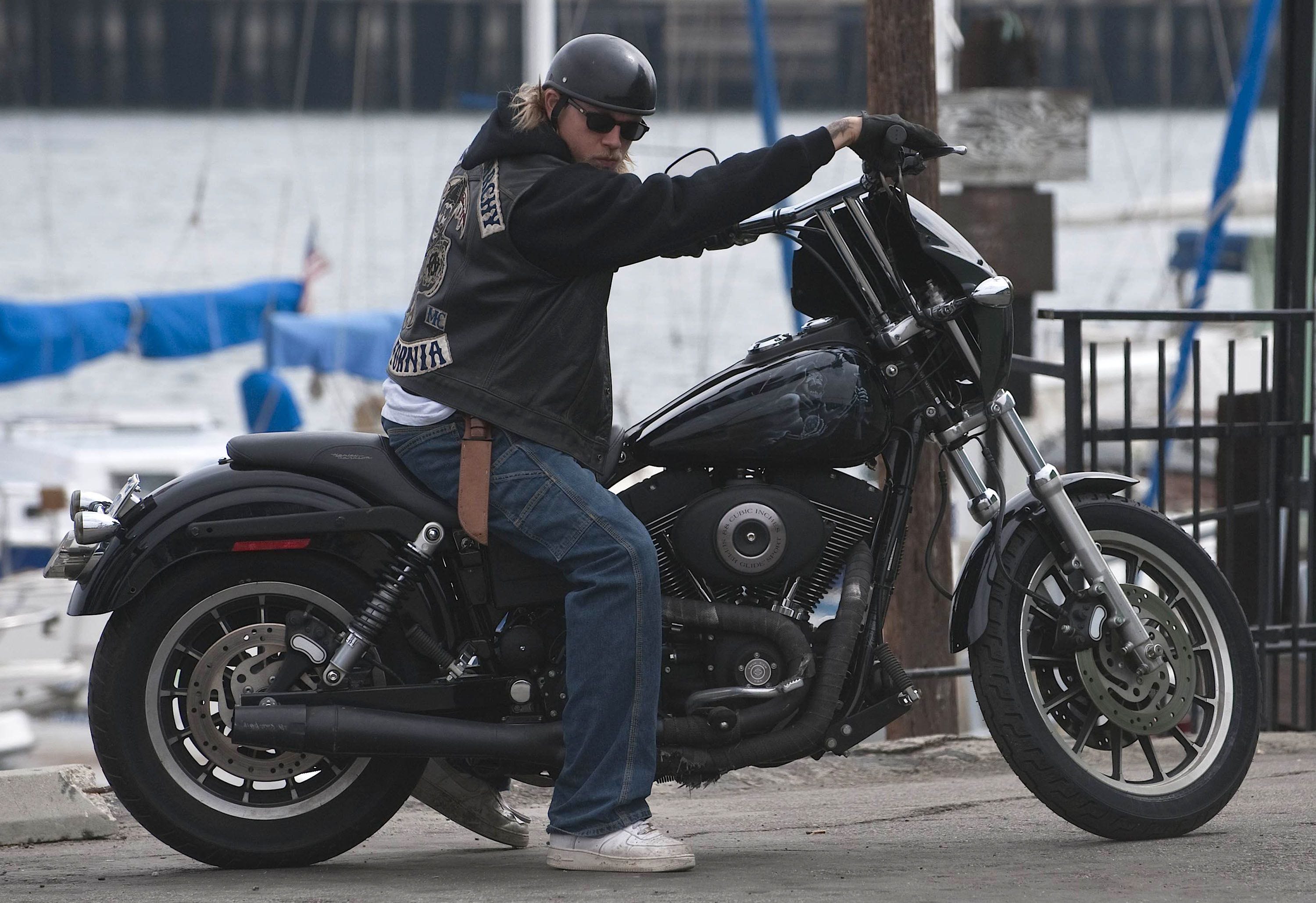
A lot of the later Dyna rush gets credited to Sons of Anarchy, and that part is mostly fair as the core SAMCRO fleet was Dyna-heavy. Jax Teller’s signature bike was a 2003 Harley-Davidson Dyna Super Glide Sport, the FXDX, blacked out with a quarter fairing and club-style bars. Clay, Tig, Chibs, and several other regulars were put on Dynas too. Not every bike on the show was one. What the series did, from 2008 to 2014 on FX, was hand a generation the picture and pre-owned FXDX prices jumped. “Sons of Anarchy style” became a listing phrase. Harley later built a lot of that attitude into the Low Rider S and Street Bob. Other brands have their own version of that story: a discontinued Triumph Bonneville, an airhead BMW, a Honda CB750, a Yamaha XS650, a bike the culture decided was not finished.
The models drawing attention share a mechanical honesty. The FXR, built from 1982 to 1994, still gets praised for a chassis that wants to be ridden. Later Evo Sportsters keep the light, approachable V-twin formula. The V-Rod, produced through the 2017 model year with its Porsche-developed Revolution engine, remains the fast outlier. None of that cancels a clean British twin, a Japanese standard, or an Indian Chief that someone is still willing to wrench. A current showroom is sharper than it has been in years. That does not cancel what a well-kept mechanical classic still does every time the side stand comes up.
If you are shopping for the bike, start with completed listings on eBay Motors before you fall for an asking price. If you are shopping for the part that keeps it alive, MotoStaq belongs on that list beside the usual auction results, and a house like Colony Machine is why the hardware for an older Harley is not actually gone. If the part was never reproduced, Jake’s rule applies: the serious ones fabricate it.
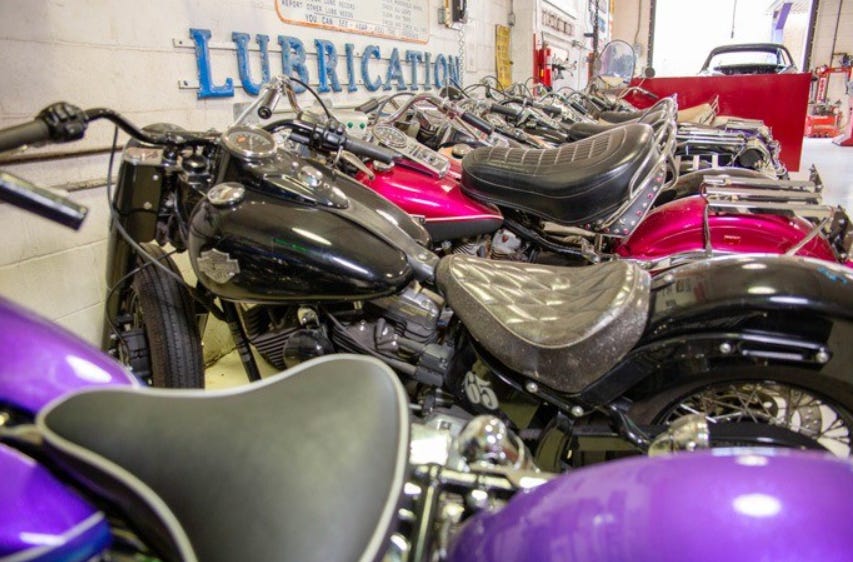
The takeaway is a good one. Lone Star Rally sends the 2026 season out. Daytona Bike Week calls it back in March 2027. The months in between are for the wrenching.
If you have been waiting on the right classic, whatever the badge, use the quiet. The good bikes, and the good parts, are still out there.
~Keep the shiny side up!