

Raine Devries | 29 October 2026
Next week the entire two-wheel industry gathers at Fiera Milano Rho for EICMA 2026. For six days the world’s manufacturers, suppliers, dealers, and media will walk the same halls, comparing notes, measuring rivals, and trying to read the year ahead. Most will stop at the Piaggio Group stand in Hall 9, booth E76, expecting another round of Vespa updates. They should look more intently. The real story is the motorcycle side of the house—and it is about to get significantly more interesting.

Why This Show Still Sets the Agenda
EICMA has been the industry’s annual reset button since 1914, when the first Salone del Ciclo e Motociclo opened at Milan’s Kursaal Diana. More than a century later it remains the place where new platforms are revealed, where engineering direction becomes public, and where the competitive hierarchy for the following season is quietly redrawn. The 2026 edition is the largest yet—ten halls, more than 750 exhibitors, over 2,100 brands. For anyone who builds, distributes, or supplies motorcycles, absence is not an option. Presence without a clear read on what the major groups are doing is almost as costly. Piaggio is one of those groups. What it chooses to emphasize in Hall 9 will signal where it intends to compete for volume, margin, and mindshare in the years ahead.
The Unlikely Path from Ships to Motorcycles
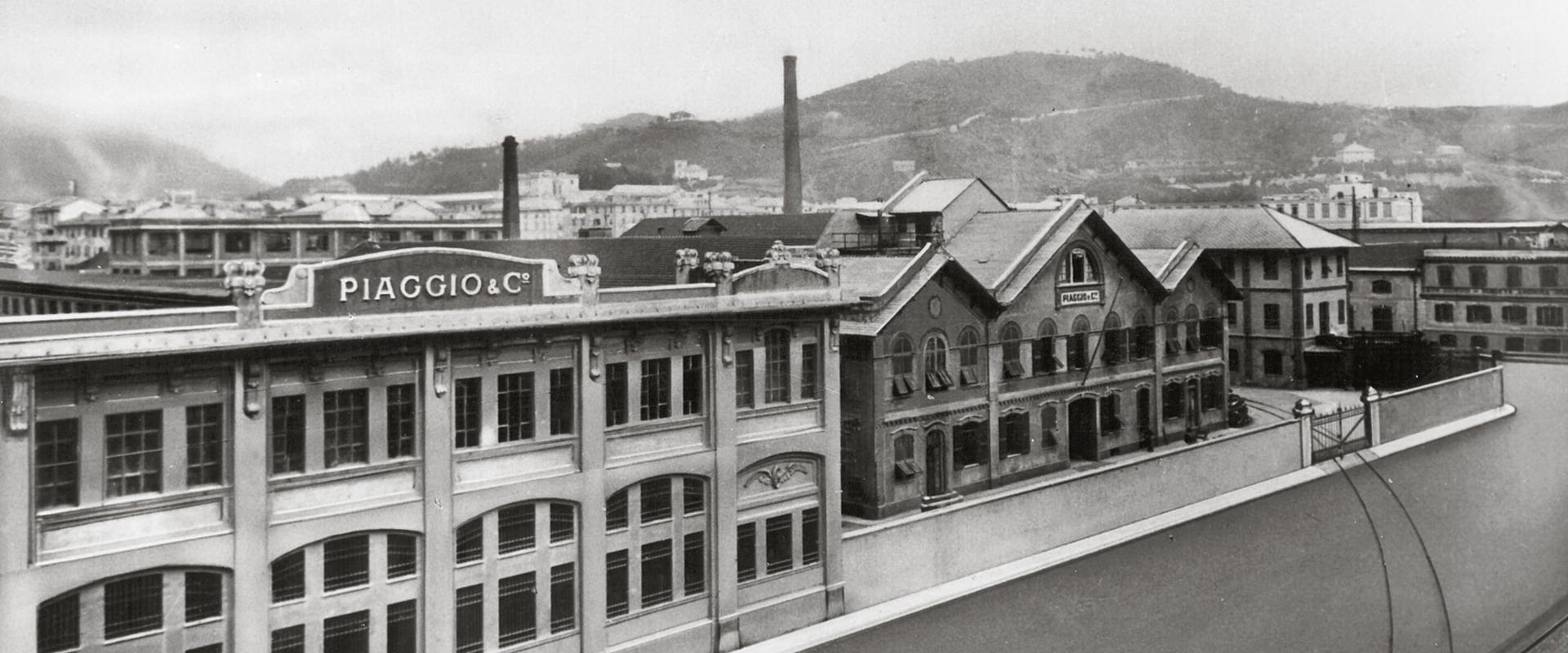
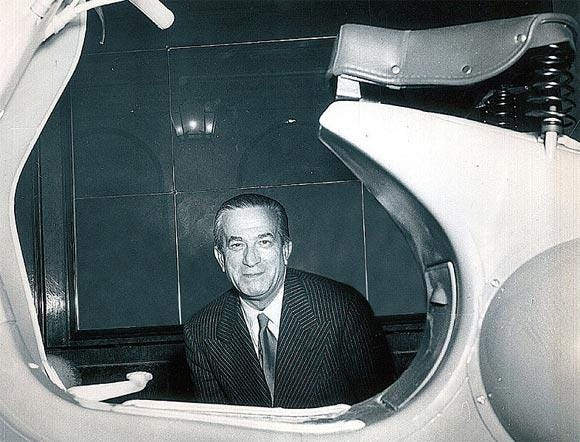
Rinaldo Piaggio founded the company in 1884 building naval fittings in Sestri Ponente and by the First World War it was producing aircraft. After 1945, with its factories damaged and aviation restricted, Enrico Piaggio and aeronautical designer Corradino d’Ascanio created the Vespa. The machine that followed was not just a commercial success; it became the template for personal mobility across Europe and far beyond. One million units in a decade. Tens of millions more over the decades that followed. The full history is documented at this link on the Piaggio Group website.

What the scooter success obscured was the company’s later, deliberate move into motorcycles. Gilera arrived in 1969. Derbi in 2001. Then, under Roberto Colaninno’s Immsi ownership, the 2004 acquisition of Aprilia brought both the Noale brand and Moto Guzzi into the group. Overnight Piaggio controlled Europe’s largest two-wheeler portfolio and one of the most complete ranges of any manufacturer. The strategic logic is laid out in the company’s profile at this link. Scooters remained the volume engine. Motorcycles became the margin and prestige play. EICMA is where that balance is now being stress-tested in public.
Two Brands with Very Different DNA
Moto Guzzi has always been the emotional core. Founded in 1921 in Mandello del Lario, it raced from the beginning—winning the Targa Florio early and taking a famous double at the 1935 Isle of Man TT with Stanley Woods. Its racing record runs into the thousands of official victories and includes the wild 500 cc V8 “Otto” of the mid-1950s. The transverse V-twin that followed became the brand’s signature: mechanical, distinctive, and stubbornly different. Recent factory investment in Mandello and steady evolution of the V7, V85, and Stelvio lines have kept that character alive. The official site still treats heritage as a living asset rather than a museum piece.
Aprilia took the opposite path. Alberto Beggio’s 1945 bicycle workshop in Noale became, under his son Ivano, a racing-driven motorcycle company. From a modest mid-1980s Grand Prix entry it rose to dominate the 125 and 250 classes. Max Biaggi’s three consecutive 250 cc titles in the mid-1990s, plus success with Valentino Rossi and others, established Aprilia as Europe’s most prolific Grand Prix manufacturer. That racing culture still shows in the road range—from the RSV4 and Tuono V4 through the RS 660 and Tuareg to the A2-friendly RS 457 and Tuono 457. The site at https://www.aprilia.com/en_EN/ makes the connection explicit. Together the two brands give Piaggio coverage from entry-level roadsters to high-performance and adventure machines. Few competitors can match that spread under one corporate roof.
What Hall 9 Will Actually Show
Vespa and the scooter range will be present and updated. The industry already knows that story. The more consequential moves are on the motorcycle side.
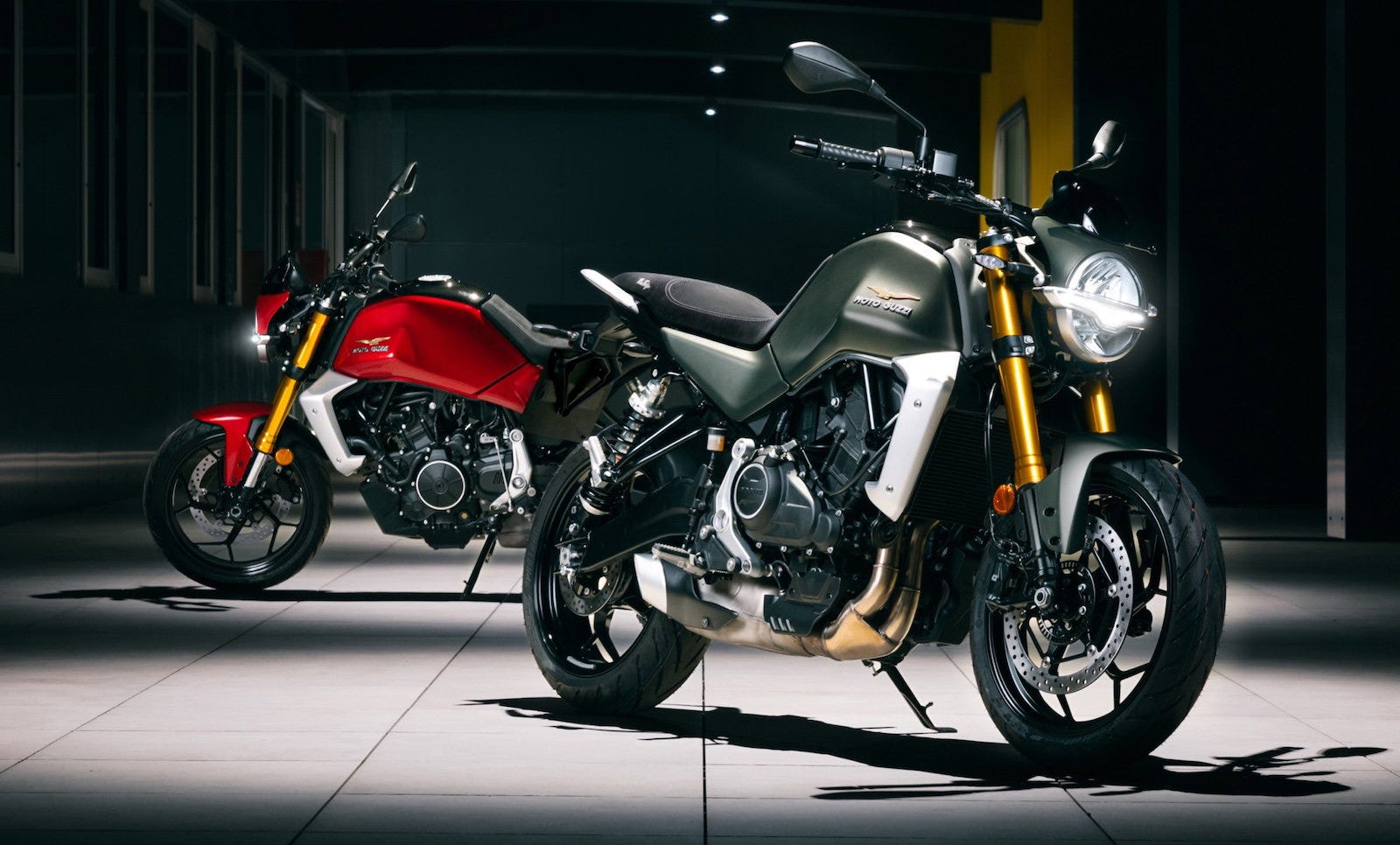
Moto Guzzi has just revealed The Trip, a compact retro roadster that is the smallest-displacement machine in the current range and the first of what the company calls “a new generation.” For the first time in roughly four decades it uses a parallel-twin rather than the transverse V-twin that has defined the brand since the late 1960s. Claimed output sits around 48 horsepower with strong low-end torque; running weight is approximately 180 kg; seat height is 790 mm. Ride-by-wire and three modes (Road, Sport, Rain) complete an A2-friendly package aimed at new riders, returning riders, and everyday use. It appears on the EICMA stand and is scheduled for dealers in early 2027. The engine draws on the proven Aprilia 457 platform—an efficient use of group resources that also marks a clear willingness to trade some traditional character for broader accessibility. Traditionalists will debate the pivot. Competitors will note the entry-level price point and the volume potential.
Aprilia is expected to show a lighter Tuareg 457 adventure model, further development of the RSV4 and RS 660 families, and updates to its 125-class machines. Moto Guzzi’s 105th-anniversary specials will also be present. Taken together, the stand is less a product launch than a statement of intent: Piaggio intends to compete across more of the motorcycle spectrum while using shared platforms to control cost and complexity.
Why Industry Readers Should Care
The combination matters. Piaggio already dominates large parts of the European scooter market. Expanding credible, accessible motorcycle offerings—especially A2 and mid-capacity models—puts pressure on everyone from the Japanese majors to the European specialists who have thrived in those segments. Shared engineering between Aprilia and Moto Guzzi lowers the cost of entry into new categories while preserving brand distinction. Dealers gain a broader ladder of products under familiar roofs. Suppliers face a larger, more coordinated purchasing group. And the rest of the industry must decide whether to match the accessibility play or defend higher-margin niches more aggressively.
EICMA has always been the moment when those calculations become public. This year the Piaggio Group stand is one of the places where the arithmetic will be clearest. The Vespa will still draw the crowds. The motorcycles will tell you where the company is actually headed.
Tickets and full details are available directly through the EICMA website.
The red drape will come off soon enough—and on the world’s most important two-wheel stage, the motorcycle chapter of the Piaggio story looks ready for its close-up.
~Keep the shiny side up!
And the show is open to the public!!!
If Piaggio really wants to increase market share in the US, they need more dealers. Period.