

Raine Devries | 1 October 2026
One year ago today, Artie Starrs took the keys.
On October 1, 2025, he became President and Chief Executive Officer of Harley-Davidson, Inc. He arrived from Topgolf with a reputation for building brands and running franchise networks - and with a promise that dealers would not be an afterthought. Twelve months later, that promise is no longer just a Milwaukee talking point. It is showing up from Pennsylvania to Saudi Arabia.
George Gatto, owner of Three Rivers Harley-Davidson in Pennsylvania, put it as plainly as a dealer can: “Complete paradigm shift on this. Dealers are optimistic and fully support Artie Starrs because he communicates with dealers often, he listens and continues to make changes where they are needed. Feel like dealers are part of the decision-making process.”
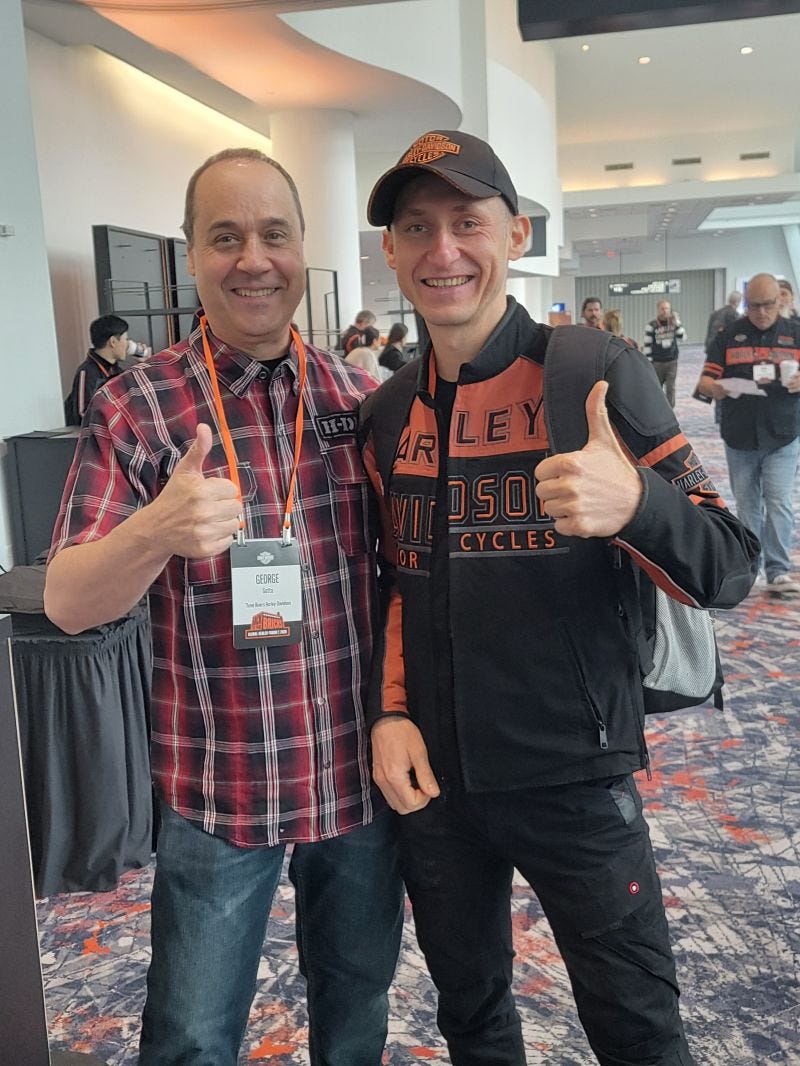
Brett Tekavec, dealer principal at Queen City Harley-Davidson and Harley-Davidson of Washington, D.C., is more measured about who gets credit for every moving piece - and just as clear about the result. “Dealer morale and satisfaction has definitely been a welcomed outcome,” he said. “I don’t know how much of this was already in progress before his arrival and what he has specifically influenced. Either way, the H-D dealer network and the National Powersports Dealers Association (NPDA) have worked hard to bring stability back.”
That is the first-year story in several voices. Not a victory lap. A change in how the Motor Company talks to the people who sell the motorcycles - and a network that is finally feeling some ground under its boots.
Communication Came Back First
Starrs’ official start lined up with Harley-Davidson’s worldwide dealer meeting in Milwaukee last year. He was on the floor, not behind a rope line. The early read from the network, which 2 Wheel Media reported last December, was that leadership would be dealer-focused. A year later, dealers are saying the conversation itself is the tell.
Gatto: “Under past leadership communication that had existed for generations was ceased. Artie opened communication up again.” He is equally direct about why that matters. “Dealers and leadership will never agree on everything, but you need to have these difficult discussions. Communication is key. Even if you don’t agree, you can understand each other’s positions.”
Tekavec points to the travel and the town halls. “With all of the town hall meetings and the visits across the country, Artie has shown he cares about the dealer network and understands how we are stronger working together.”
That is not soft language. It is dealership language. Starrs did not need everyone to clap on cue. He needed the conversation to exist again - and then he needed to keep showing up for it.
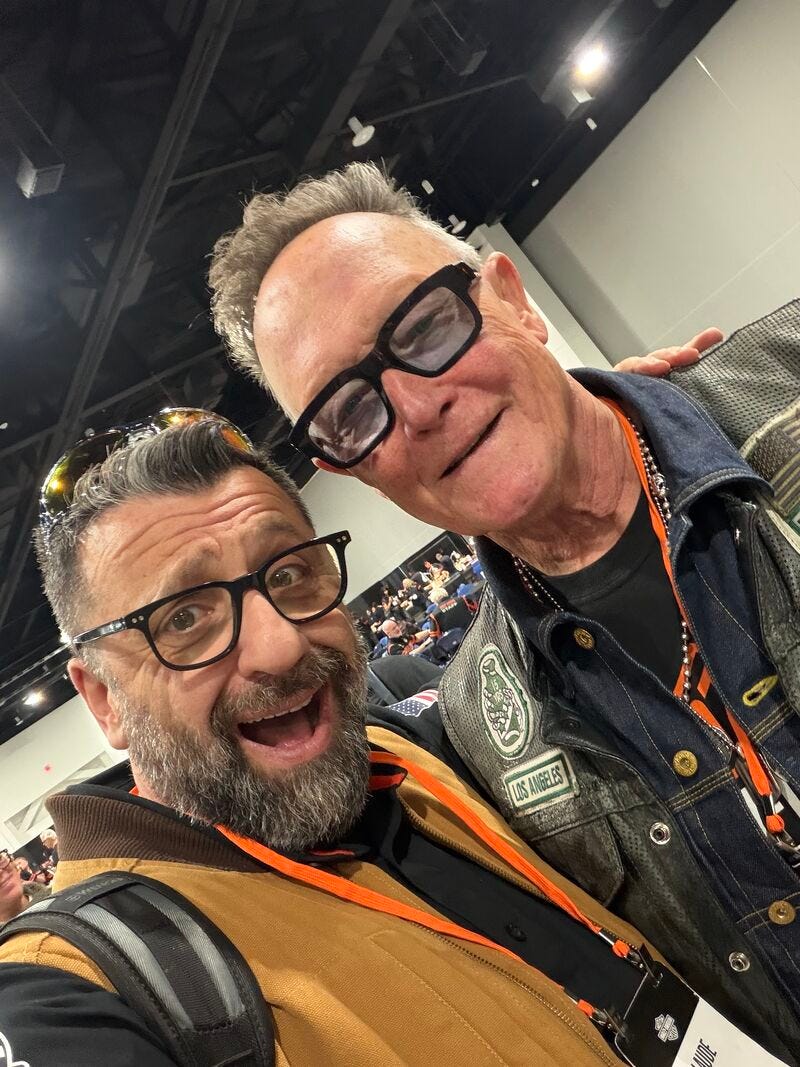
The latest Milwaukee gathering put that same temperature check on a global stage. Claude Abry, general manager and dealers consultant for Harley-Davidson Jeddah and Dhahran in Saudi Arabia, came home from the 2026 Dealer Forum talking about “exciting strategies and the clear, powerful momentum building from leadership down to the chapters.” The product news mattered. The room mattered more. “Beyond the exciting strategies… it’s the community that reminds us why we do what we do,” Abry said. “The wave is starting, the energy is back.”
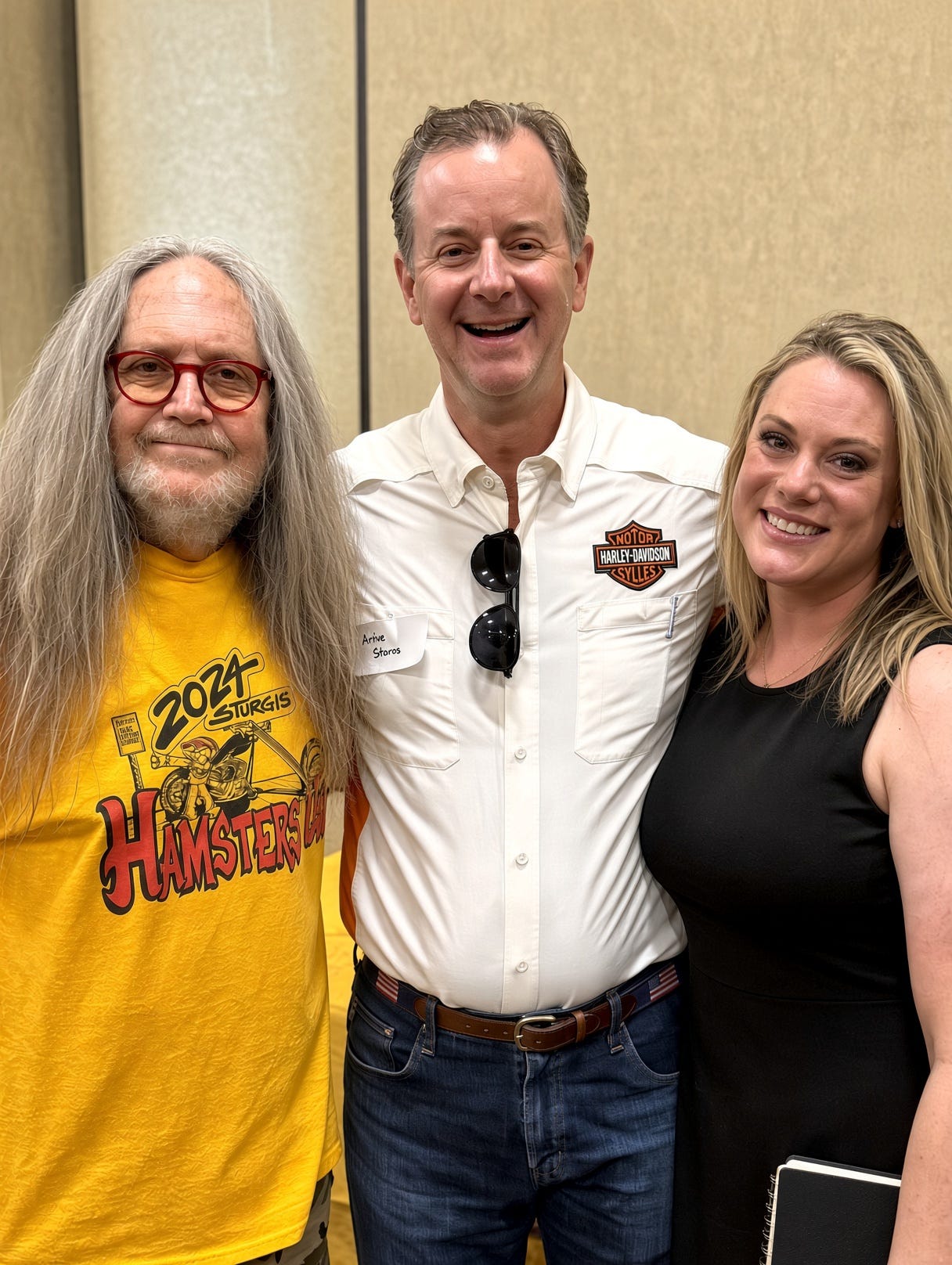
Artie has also been visible where riders actually gather. A few weeks ago in Sturgis, Rick Fairless of Strokers Dallas and Strokers Ice House was photographed with the CEO during Bike Week. Fairless did not parse days supply. He went straight at the year-one question.
“Harley Davidson got it right by bringing in Artie Starrs to run the Motor Company! Artie has them on the right track & the future is looking better than it has in years! Thank you for all you’re doing Artie, we appreciate all the hard work you & your HD Team is putting in!”
The Inventory Fix Changed Daily Life
Ask Gatto what helped his store the most, and he does not reach for a slogan. He reaches for days supply.
“Cutting production of new vehicles is the biggest factor. Days supply of new vehicles was way too high, which added huge floor plan interest costs and discounting.” Floor plan interest is the money a dealer pays the bank to finance unsold new bikes sitting on the showroom floor. When that inventory piles up, the meter keeps running. “No one was making money on new vehicles because they needed them gone to reduce floor plan costs. It was a race to the bottom.”
Then the number that dealers actually live with: “Massive improvement in new vehicles. We went from over 200 days supply to 90 days, where it should be. HD also is only producing the models and colors that sell well.”
Tekavec sees the same cleanup from a different map. “Our inventory has been cleaned up; there is very little non-current product left. With new products on the horizon, better times are ahead.”
That single change ripples through everything else—hours, staffing, the quality of the team on the floor, and whether a customer walks into a store that feels healthy or hunted. “You can’t offer an exceptional customer experience if you are losing money,” Gatto said. “Profitability affects not only proper inventories, but also days and hours of operation, staffing levels, and even the quality of our team members.”
He calls proper new-vehicle production the initiative that most benefited dealers in year one: the right days supply, the right models, the right colors. “There will not be many carry over vehicles going into 2027. This equates to dealers making a reasonable profit margin and not paying out huge floor plan interest costs.”
Floor-plan support in the slow months came back in a useful way, too. “Artie added some of this back in during the off season which was a huge help to dealers. It’s hard to pay out money you don’t have nor is it coming in in the off months.”
Traffic Followed the Floor - and the Website
Sales are up at Three Rivers, Gatto said—but he is careful about the reason. The inventory is right. The mix is right. And the tug-of-war between factory e-commerce and the dealership has been pulled back toward the showroom.
“The direct competition between HDMC and dealers regarding ecommerce has been eliminated too. Customers who were buying online at big discounts and free shipping are now coming into the dealership where they buy more, and many times see that new or used bike that catches their eye and makes that big purchase. Floor traffic is up, and so are sales and margins.”
Tekavec’s traffic story is a little different and just as useful. “My floor traffic has remained the same but our website visits are up significantly which has resulted in more sales and profitability.” In other words, the digital front door is finally feeding the store instead of starving it.
That tracks with the broader year-one work under Starrs: stop selling around the dealer, start sending the customer through the franchise. Harley-Davidson’s own shift toward buy-online, pick-up-in-store was built for exactly that outcome.
Limited-edition metal is doing its job as well. “New limited edition vehicles have been a huge hit usually selling out before they even ship,” Gatto said.
Product Strategy Dealers Can Sell
In May 2026, Starrs put a name on the direction: Back to the Bricks, a nod to Juneau Avenue. Touring stays the core. The plan around it is more rider-centric, more customizable, and more willing to rebuild the on-ramps that feed the brand for the long haul - including the return of an air-cooled Sportster 883 in 2027 and a more approachable Sprint planned around the same stretch.
Gatto does not treat those lower-priced categories as a side note. He treats the earlier cuts as a wound the network is still healing from. “Cutting Sportster is one of the biggest mistakes in the history of the company. These accounted for 20 to 25% of vehicle sales. Add to this clothing, parts/accessories, labor, and F&I and even with lower vehicle margins, it all adds up.”
That is why the Sportster conversation under Starrs matters so much to dealers. It is not nostalgia for its own sake. It is traffic, attachment, service bays, and the next rider who cannot—or will not—start on a high-dollar bagger.
Parts and accessories are moving in the same direction. “P&A back orders have been greatly reduced, and lead times continue to improve. Artie has announced that we will see not just more accessories but more competitive items in the categories that were basically ignored or cut the last 5 years.” Gatto said most of what is on shelves now was already in the pipeline, but the promise is more customizable OEM product—parts that bolt on, fit right, and keep customers from drifting to poorly fitting aftermarket pieces.
Training is the unfinished piece. Harley-Davidson University used to be a point of pride. A lot of that live culture was replaced with product videos. “We have asked Artie to bring back as much of the former HDU training as possible,” Gatto said, while giving credit where the factory did listen: some modules were pulled back during peak season so stores were not yanking productive people onto a laptop in the busiest months.
Marketing, Programs, and a Straight Story
Brand work in year one included the “Ride” platform and a return of the historic Bar and Shield to the center of the visual language. In the stores, Gatto says the difference is planning.
“I feel like the new marketing team is planning in advance, coming up with programs that are well thought out, and basically it is vastly improving.” Earlier programs, he noted, were already baked before the new team could fully take the wheel. The trajectory is what he likes.
Tekavec’s optimism lives in the operating rhythm. Asked if he is more confident in the brand’s long-term direction than he was a year ago, he did not hesitate: “Yes, we have stability in how we operate with HDMC programs, such as HD1 and MDF.”
Gatto is just as blunt about investor messaging. “Artie said 2026 is a reset year, this is exactly what it is. He doesn’t make misleading or half truth statements. It’s the real deal. And we all need this in order to succeed.”
That candor matches the public scoreboard. North American retail found consecutive quarters of year-over-year growth. Dealer inventory got healthier. Super Glide and Deadwood gave the floor motorcycles with actual Harley-Davidson character. After the second quarter, the company raised its full-year outlook. And under Starrs, Harley-Davidson announced it would bring Revolution Max production for North America back to U.S. facilities in Pennsylvania and Wisconsin—an especially grounded note for a Pennsylvania dealer watching American manufacturing come home.
Family stayed in the room as well. Starrs brought Bill Davidson in as a special advisor and brand ambassador, closer to product, brand, and rider culture. For a company whose tank still carries a last name, that was not window dressing. Claude Abry felt it walking Juneau Avenue after the 2026 Dealer Forum, time spent with Bill and Karen Davidson, and the welcome of the next generation onto the team. “Under the inspiring new leadership of CEO Artie Starrs, we have returned beautifully to our family roots,” Abry said. “Walking through the halls of Juneau Avenue and chatting with the team, the energy and positivity are electric. This isn’t just business — this is family.”
Optimistic - With Work Still on the Bench
Customer scores at Three Rivers are improving for a practical reason: the store is not running as short-staffed as it had to when dealer health was an afterthought. Gatto is more optimistic about the long-term direction than he was a year ago. “We have seen significant improvements in all areas. Dealer health is being addressed and is improving. Artie Starrs’ leadership style is what HD dealers were accustomed to over the years.”
The next-priority list from both men is almost the same sentence in two accents.
Gatto: “They cannot fix all of the damage… it will take time. Dealer health for one has improved, but is still not where it needs to be. If they continue to ask questions, listen, and improve, everyone wins.”
Tekavec: “Continued focus on dealer profitability.”
That is a fair anniversary review. Starrs did not inherit a victory parade. He inherited a network that wanted to be heard, floors that were overstocked, and a brand that needed its front door back. One year later, Gatto, Tekavec, Abry, and Fairless are willing to say the direction is better, the network is being heard, and Milwaukee is showing up.
The second year is when Sportster gets closer, the accessory wall gets more interesting, HDU has a chance to feel like Harley-Davidson again, and Back to the Bricks has to keep proving itself where it counts: days supply, profitable deals, and a customer who leaves the store wanting the next ride.
One year down for Artie Starrs at Harley-Davidson. The dealers who answered the phone are not whispering. They are telling Milwaukee to keep listening.
~Keep the shiny side up!
I appreciate the article, and the depth of the analysis, but allow me to ask the unpleasant question : Reset to what, exactly?
Reset to 2020, before Jochen Zeitz? The slide in Harley-Davidson sales, revenue, marketshare and stock price have been declining since 2014. Harley-Davidson has had 5 CEOs, 6 turnaround plans and one $2.3 government bailout since 2008. These are the facts.
And yet the cheerleaders continue to clap their hands when someone shows up with a PowerPoint, catchphrase, and praises the culture. This is a business in crisis, and is going the way of SEARS, GM and Blockbuster.
Can we have an unemotional, fact-based and honest conversation about Harley-Davidson? It is required if we want to save this once great company.
There is a lot more to Artie Starrs, the new CEO at Harley-Davidson, than even this article explains. Much is made of the fact that Artie Starrs was not previously a rider. The part that no one tells you is that Artie Starrs took a riding class and bought a Harley before he was willing to apply for the position. He cares. He is also a servant-leader.
Two days after being told he was going to be hired for the position, Artie Starrs was on the phone with George Gatto. Before even starting the position, he had talked to numerous dealers. On the way to the dealer show where he was introduced to the dealers on his first day, he found out that one of the dealers was not feeling well. He gave that dealer his airplane seat in First Class and sat in the dealer's business class seat.
At the airport, he rented a car, then gave dealers rides to their hotel. The stories go on. To my knowledge, there is not a single Harley-Davidson Dealer that does not support him! That says something!
...and bringing back the air-cooled Sportster was a move that was long overdue, and a definite move in the right direction! bobcascaddan.substack.com